
Crimson Aspen shares practical, down-to-earth guidance on british garden trees and woodland planting for readers across the UK.
- 0123456789
- Angle Bd Abdelmoumen & rue soumaya, Résidence
- [email protected]
Crimson Aspen shares practical, down-to-earth guidance on british garden trees and woodland planting for readers across the UK.
 By Eleanor Whitfield
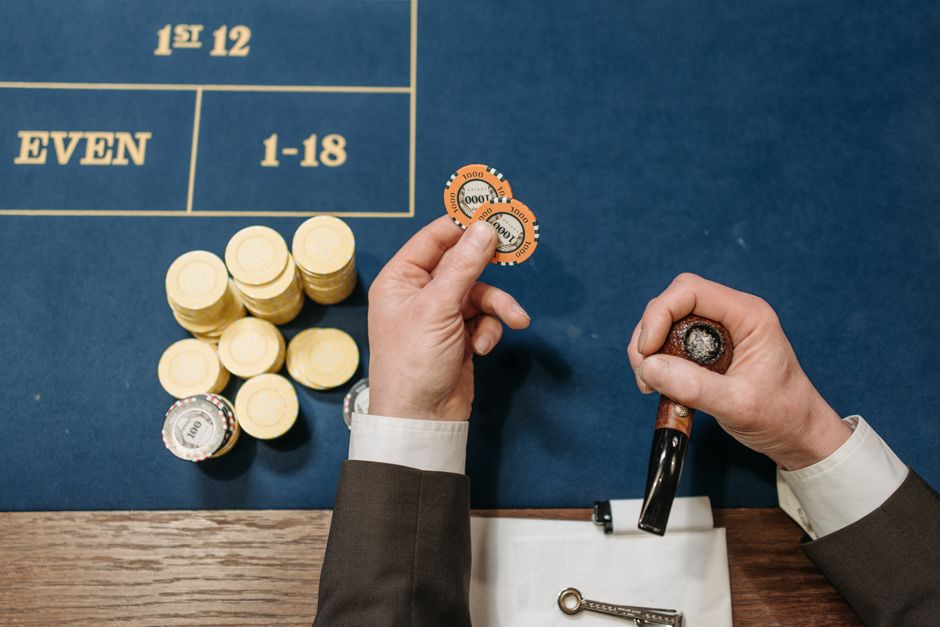
You’ve seen the ads: a guy in a cheap suit screaming about a “guaranteed system” to beat the casino. Or a Telegram group promising “fixed” poker games. Let’s cut through the nonsense. After fifteen years in and around the iGaming world—writing, playing, and occasionally winning—I can tell you the secret isn’t a secret at all. It’s discipline, math, and understanding exactly what kind of game you’re playing.
Every slot machine runs on a Random Number Generator (RNG). That means each spin is independent. The machine doesn’t “heat up” or “go cold.” A slot that hasn’t paid out in three hours is no more likely to hit than one that just paid. This is the hardest truth for new players to swallow.
So why do some people walk away with thousands? Variance. High-volatility slots like Bonanza or Money Train 3 can go 500 spins without a win, then drop a 5,000x multiplier. Low-volatility games like Starburst pay small amounts frequently. Neither is “better.” They just suit different bankrolls and temperaments. For practical tips, check out https://winvn.company/.
Here’s a concrete example: You have $200. On a high-volatility slot at $1 per spin, you might last 200 spins. On a low-volatility slot at $1 per spin, you might last 400 spins because of frequent small returns. The math is simple: your bankroll divided by your bet size equals your expected number of spins. If you want longer playtime, lower your bet. That’s it.
Poker is different. The house takes a rake, but your opponents are the ones you’re trying to beat. This means skill matters. A lot. But not the kind of skill you see in movies.
In Texas Hold’em, the best players don’t win by bluffing every hand. They win by making mathematically correct decisions over thousands of hands. For example, if you have four cards to a flush on the flop, you have roughly a 35% chance to complete it by the river. If the pot odds offer you better than 2-to-1, you call. If not, you fold. That’s it. No gut feelings.
Position is everything. Acting last gives you information. If everyone checks to you on the button, a bet often takes down the pot regardless of your cards. New players ignore this and play too many hands from early position. They bleed chips slowly.
Bankroll management is non-negotiable. A common rule: never buy into a cash game for more than 5% of your total poker bankroll. If you have $1,000, play $50 buy-in games. This keeps you from going broke during a downswing, which will happen.
Sports betting isn’t about picking winners. It’s about finding value. The bookmaker sets odds to balance their risk, not to predict the future. Your job is to spot when the odds are wrong.
Example: A football team is +150 underdog at Book A, but +170 at Book B. That’s a 6.7% difference in payout. Over 100 bets, that’s significant. Always have accounts at three or four sportsbooks to compare lines. This is called “line shopping.”
Another key concept: implied probability. Odds of -200 mean the book thinks there’s a 66.7% chance of that outcome. If you believe the true chance is 75%, that’s a value bet. But if you believe it’s 60%, you should bet the other side (if the odds are right).
Bankroll rules apply here too. Flat betting—same amount on every game—is boring but effective. Or use a unit system: 1 unit = 1% of your bankroll. Never bet more than 2-3 units on a single game, no matter how “sure” you are.
Casinos and sportsbooks aren’t charities. That 100% deposit bonus comes with wagering requirements. A typical offer: “Deposit $100, get $100 bonus. Wagering requirement: 30x bonus.” That means you must bet $3,000 before withdrawing any bonus winnings. On slots with a 4% house edge, you’ll lose $120 on average before clearing it. The bonus is worth less than it looks.
Free spins? Often only on specific slots with low RTP. Read the terms. If it says “winnings from free spins cap at $100,” that’s a hard limit. Still, some reload bonuses or cashback offers are genuinely +EV if you’re a disciplined player. Just do the math first.
Here’s what nobody wants to hear: 95% of long-term players lose money. The 5% who win do so through rigorous discipline, deep math, and treating iGaming as a skill game where the edge is tiny and hard-won. If you’re playing for fun, set a strict budget, never chase losses, and walk away when you hit your stop-win target. If you’re playing to make money, understand that you’re competing against professionals and algorithms that never tilt. The house edge never sleeps. Your best weapon is knowing exactly when to stop.


We are not gonna make spamming
